An Introduction
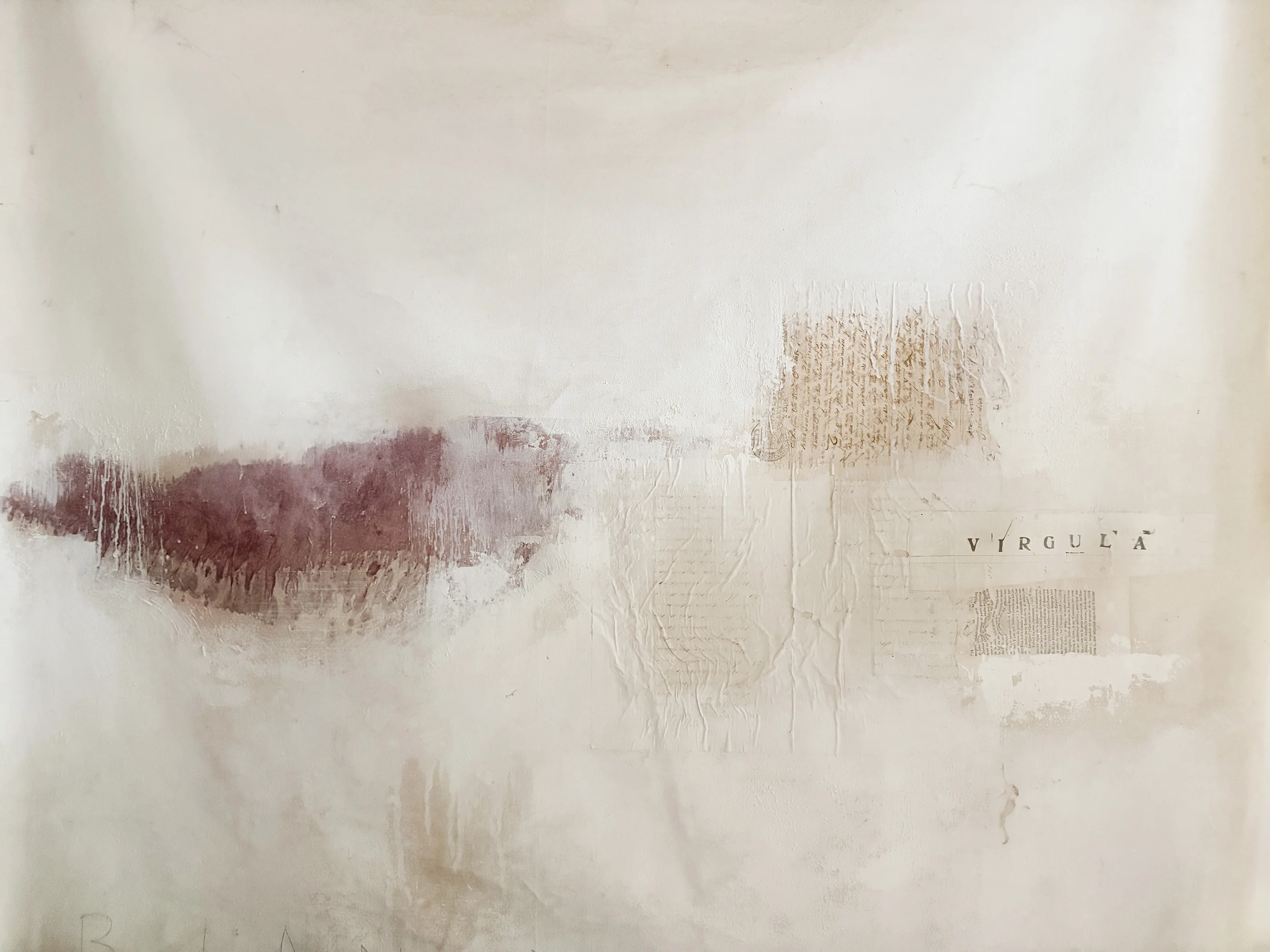
Freedom of expression, censorship, and the arts: a series of essays, interviews, and artworks exploring the role of creative practice in sustaining liberal democracy.
Welcome to this series of essays and interviews for the Miller–Zillmer Foundation: Freedom of Expression, Censorship and the Arts. It is arranged in four parts. The first presents this introduction and a framing essay on liberal democracy. The second gathers reflective essays and transcripts of interviews with artists, journalists, and music-industry professionals about freedom of speech. The third presents a selection of artworks chosen by the participants—freedom of expression in action. The fourth concludes the project.
Like so many things in my life, this process began through chance and necessity. I came to Berlin in the middle of 2022 with one goal—to play music. To support that goal, I sought out secondary income streams. Pulling out my Master of Arts in Journalism, a degree which had taken me many places but not into journalism, I travelled to Ukraine to interview artists living amid war. This led to a commission from the Miller–Zilmer Foundation to produce a series of articles and interviews on censorship and free speech in the arts.
At first, I found myself lost in a thicket of hypotheticals. Should you have an absolute right to shout “fire” in a crowded cinema even in the absence of a fire? Should artists be held accountable for the actions and ideas of their creations? Does art reflect or cause social change? As I began interviewing people, however, theory receded and the project found its footing.
I came to appreciate, more than I had anticipated, the importance of freedom of expression to a person’s sense of identity, and to value the role of art and journalism as bulwarks against authoritarianism. Seen through this lens, the artefact itself is of secondary importance. It is the freedom to make it—the drive to make it—that is the salient point. The need to express oneself runs deep. Consider the ostracism, persecution, or imprisonment that some endure. Consider the risk of premature death. One study found that pop and rock musicians die significantly earlier than their non-musical contemporaries. An International Federation of Journalists study puts the number of journalists killed since 1990 at over three thousand.
I have never been a natural joiner, and I have never found that one overarching ideology, religion, or philosophy that satisfies all doubts. I have always envied believers—those willing to place themselves in harm’s way for an ideal. Freedom of expression is the closest I have come to such a conviction; the cause I would stand behind. Reflecting on these interviews, particularly with those who struggled to create under autocratic regimes, I was reminded of a police officer I knew in a previous life in the Pacific. His work against corruption placed him and his family in constant danger, while his chances of success were minimal. His risk matrix would have advised against it, yet he persisted. Why? Faith in his Christian God. To him, anti-corruption was a mission, and every hardship a test—a moment to reaffirm his moral identity.
I do not share his religious faith, but I recognise something parallel in my own commitment to art. Over the past three years, pursuing music has become something more than a vocation. Working on this project, hearing these personal histories, has strengthened that conviction. Making art, writing, recording a song—at this particular moment in history, when liberal democracy is under pressure on multiple fronts—feels necessary. It is no longer optional. I have not felt this before, not with such clarity or force: a belief in the purpose of music, in the depth of its function, and in its role both as a safeguard at the macro level and as a space of non-partisan inclusion at the micro level.
What can I say? When that kind of belief settles in, everything appears possible. Without it, there is only uncertainty, and at times, fear. Through one lens, you are engaged in something meaningful; through another, you are on the edge of failure—financial instability, precarious housing, dependence, doubt. The past three years have been difficult. I have moved between these poles of conviction and anxiety. Yet for all the hardship—poverty, instability, bureaucratic frustration—making music has remained something I must continue for as long as I am able. The experiences of others in this series, particularly those who have taken significant risks to express themselves, have reinforced that belief.
It is there, beyond the surface-level concerns—beyond petty rivalries, career calculations, and the empty spectacle of cultural life—that a more durable conviction can be found: that freedom of expression matters, and that it remains central to the democratic experiment it sustains.
Thanks in no small part to the patience and support of the foundation’s founders, Diane Zillmer and Daniel Miller, and to the editorial guidance of my friend and mentor, Robert MacMillan, this series is complete. I hope that it makes a modest contribution to the preservation of liberal democracy—imperfect though it is—a system that allows the greatest scope for diversity of thought and coexistence within a shared framework.


Join the conversation
If you have thoughts about this project or would like to share feedback, send us your name and comments at: